
Volunteer Pathway
Table, set up, and support public events.
This pathway includes two related but different roles: Event Tabling Volunteers, who are usually public-facing, and Equipment Transportation Volunteers, who focus more on logistics, setup, teardown, and getting supplies where they need to go.
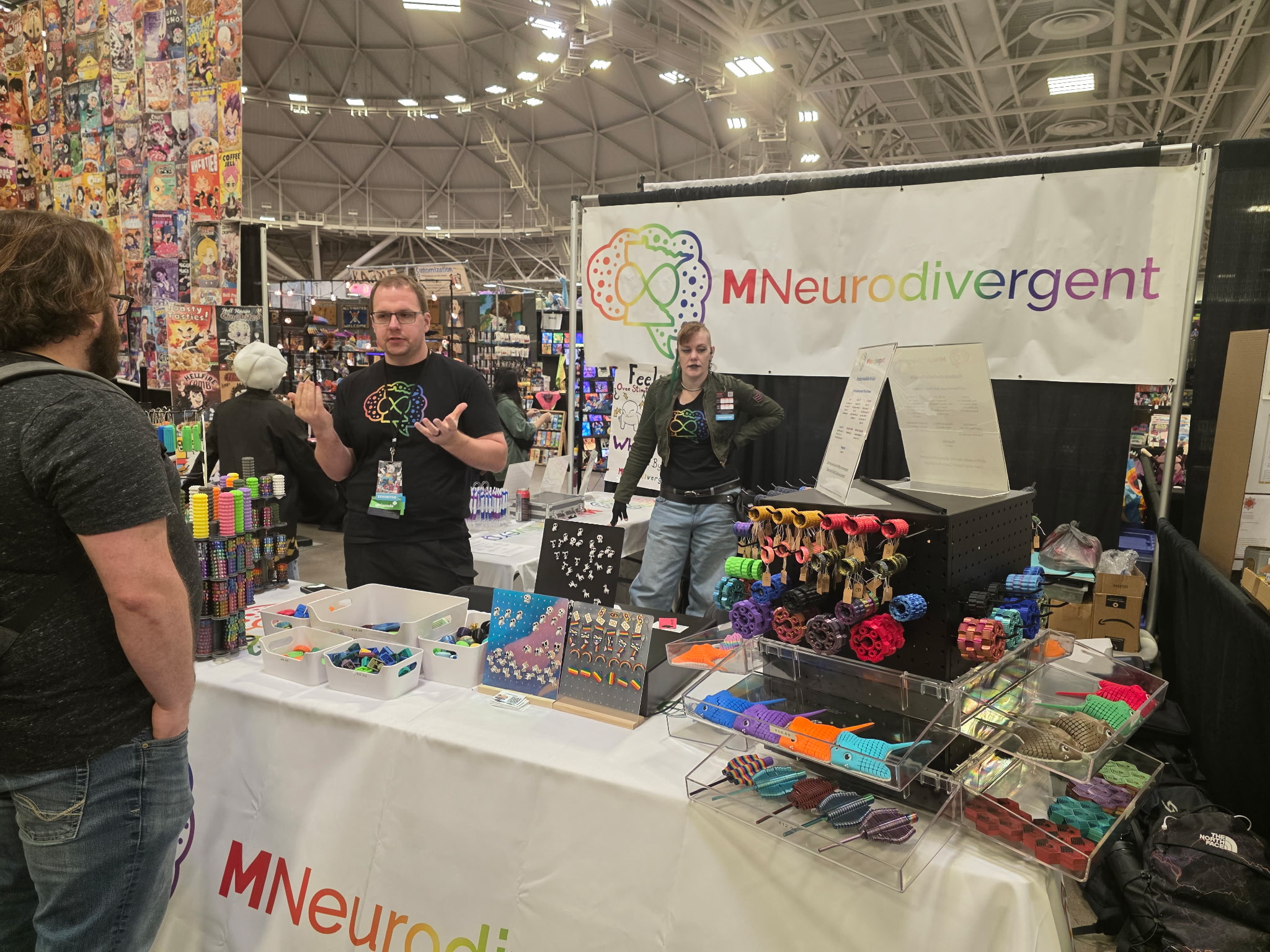
Two ways to support public events
Choose the type of support that fits your strengths and capacity.
Some volunteers enjoy talking with visitors, explaining the organization, and helping people feel welcome at the table. Others prefer practical behind-the-scenes work like transporting supplies, unloading bins, setting up displays, or helping pack everything safely at the end.
Public-facing role
Event Tabling Volunteer
Event Tabling Volunteers help represent MNeurodivergent at conventions, festivals, Pride events, resource fairs, and other public gatherings. This role is about helping visitors understand who we are, what we do, and how they can connect with neurodivergent communities across Minnesota.
What event tabling can look like
These photos show real MNeurodivergent tables at conventions, Pride events, and community gatherings.
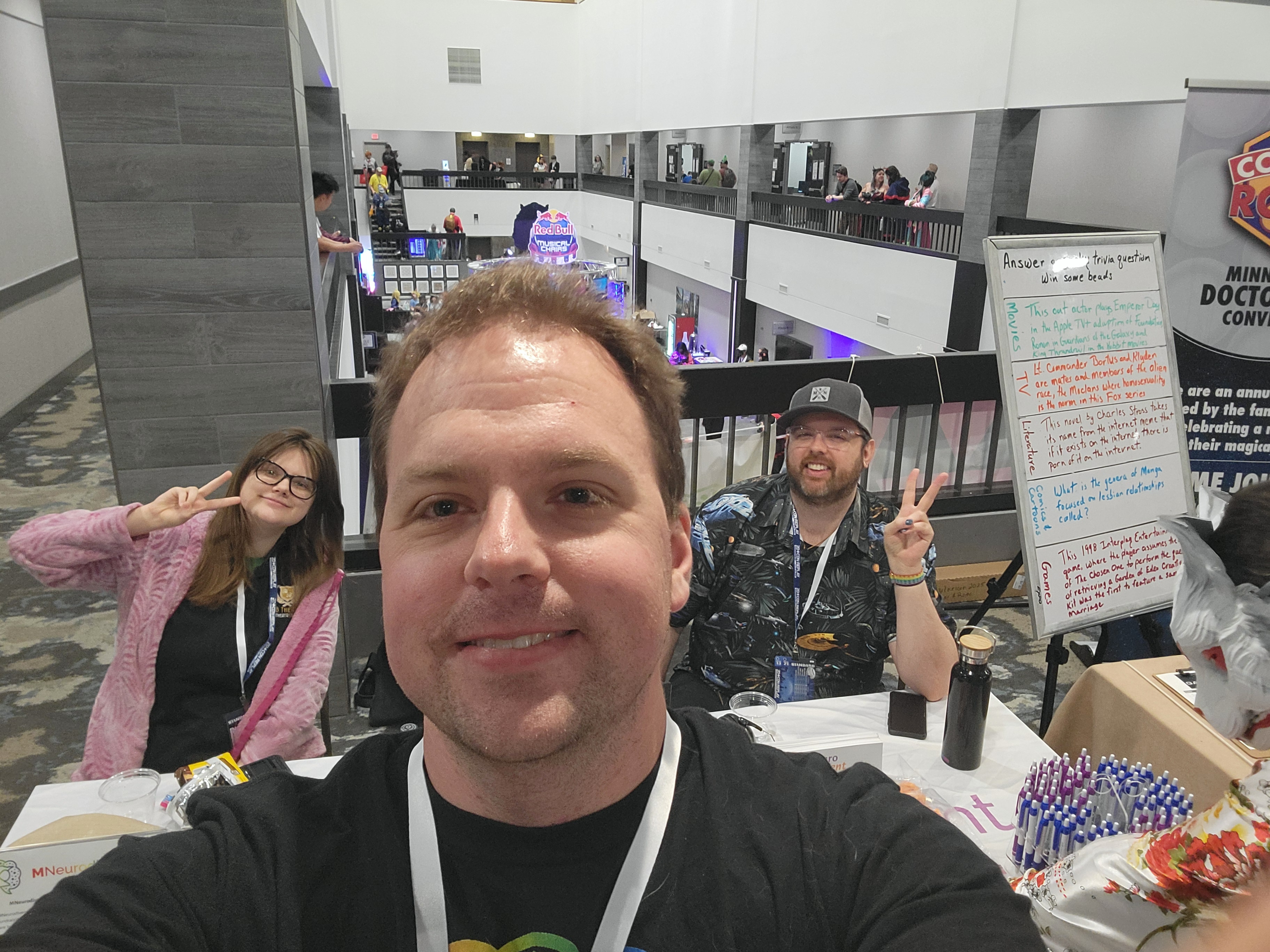

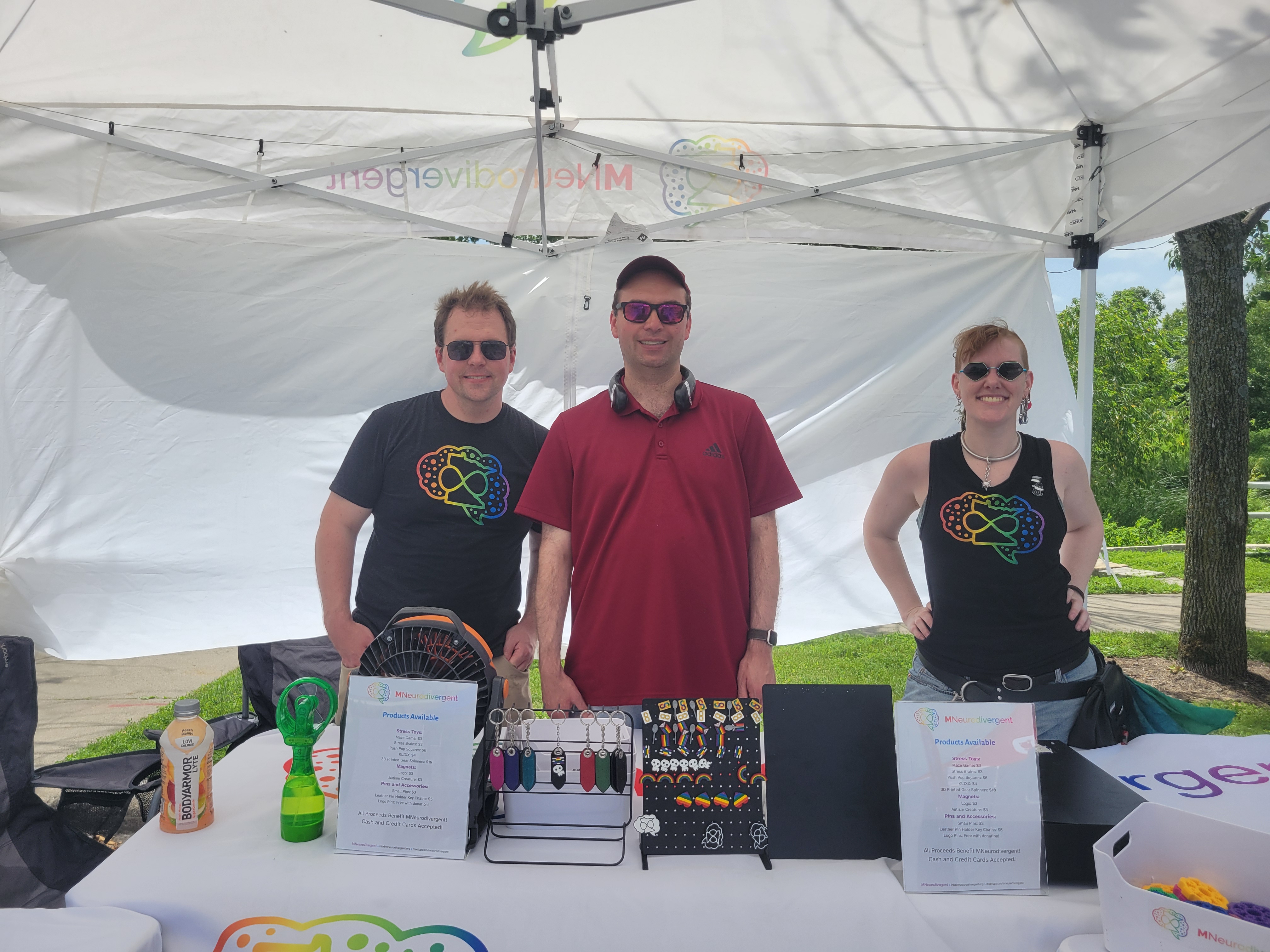
.jpg)
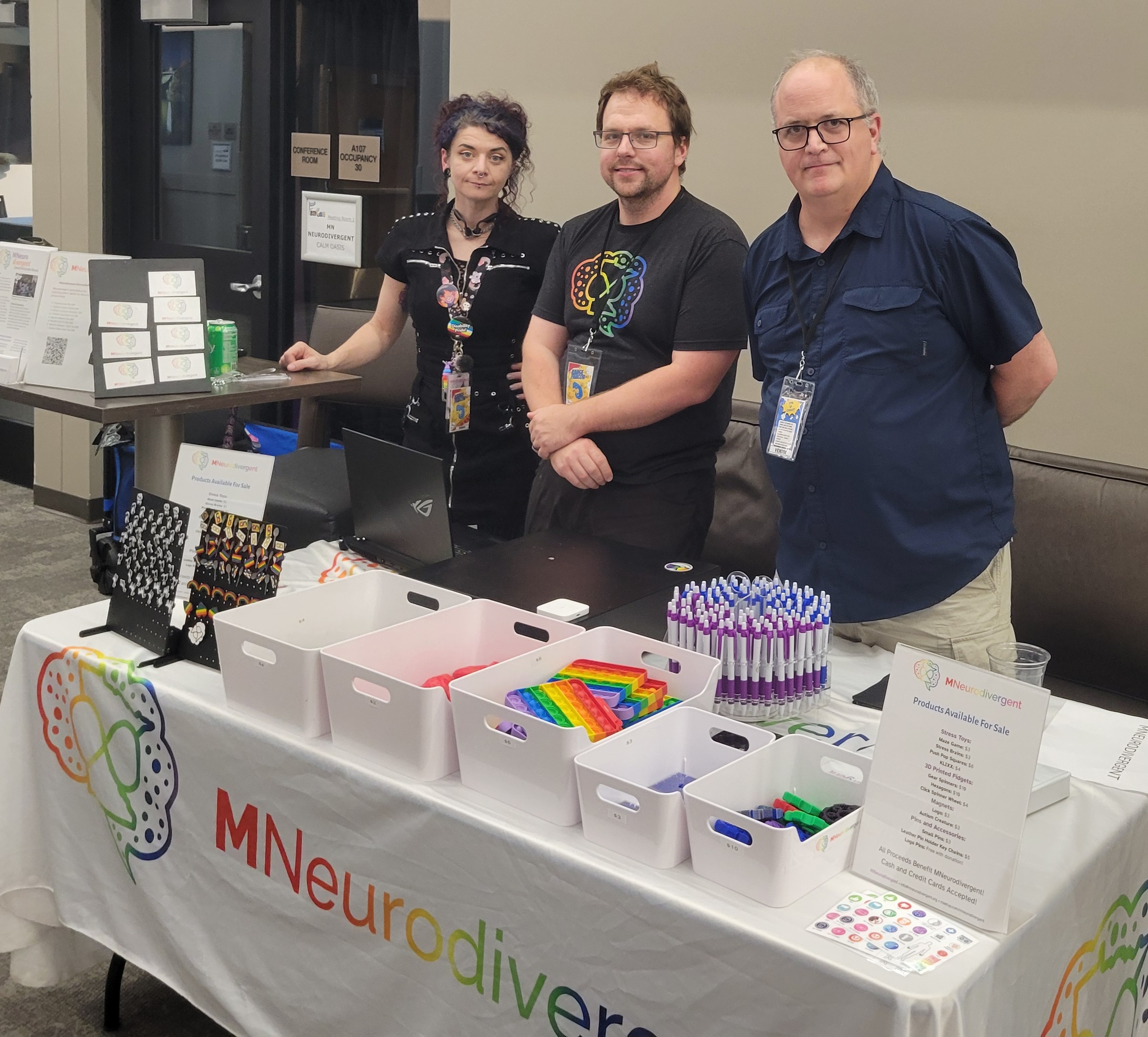
Note: HEIC images may not display consistently in all browsers. If Beekah_Aakash.heic does not render, convert it to a JPG or PNG and update the filename here.
Core responsibilities
Booth and display setup
Set up and take down booth displays at conventions or tent setups at outdoor festivals, including tables, signage, fidgets, and materials.
Public interaction
Talk with attendees, answer questions, and help people understand what MNeurodivergent does and how to get involved.
Outreach materials
Hand out business cards, flyers, and other materials so people can stay connected after the event.
Merchandise support
Display, restock, and help sell MNeurodivergent merchandise, including 3D-printed pins and fidgets, using tools like Square or cash handling when needed.
Shift coordination
Communicate with the event lead about availability, shift coverage, arrival times, and any changes as early as possible.
Team participation
Attend the monthly virtual meeting to stay aligned, share feedback, and stay updated on events, expectations, and improvements.
Event Tabling shift structure
Tabling roles are usually scheduled by day, with morning and afternoon coverage windows.
Event Tabling Volunteers usually sign up for specific coverage windows so the table has reliable support throughout the event. The exact times vary by convention, festival, or public gathering, but postings will usually ask for the specific days and windows where help is most needed.
Friday
- Morning: starts around 9 AM–12 PM and ends around 1–4 PM
- Afternoon: starts around 1–4 PM and ends around 5–8 PM
Saturday
- Morning: starts around 9 AM–12 PM and ends around 1–4 PM
- Afternoon: starts around 1–4 PM and ends around 5–8 PM
Sunday
- Morning: starts around 9 AM–12 PM and ends around 1–4 PM
- Afternoon: starts around 1–4 PM and ends around 5–8 PM
What it may feel like
Tabling can be active and sometimes busy. You may talk with many visitors, answer repeated questions, help people browse fidgets, explain upcoming events, or support someone who is curious but not sure how to connect yet.
You are not expected to know everything. A strong tabling volunteer is someone who communicates reliably, stays kind and grounded, and knows when to ask another volunteer for support.
Behind-the-scenes role
Equipment Transportation Volunteer
Equipment Transportation Volunteers help make events possible by moving supplies, displays, bins, signage, fidgets, sensory materials, or other equipment to and from event locations. This role is more logistics-focused and is often less public-facing than tabling. Because this role involves physically transporting event equipment, volunteers must have a valid driver’s license and reliable access to a midsize SUV or larger vehicle.
Transportation requirements
This role requires driving and meaningful cargo space.
Valid driver’s license
Volunteers in this role must have a valid driver’s license and be comfortable coordinating pickup and drop-off timing with event organizers.
Midsize SUV or larger
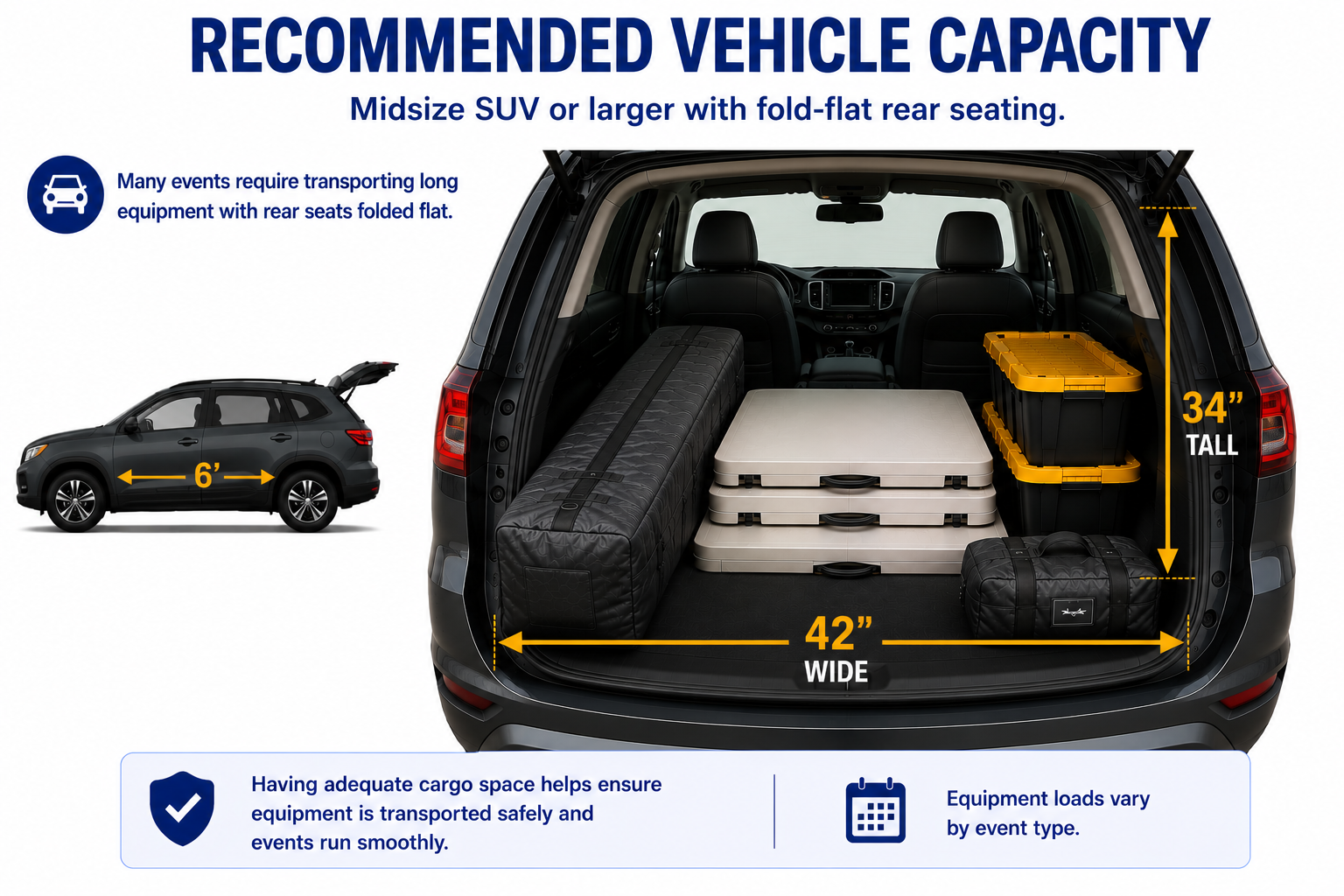
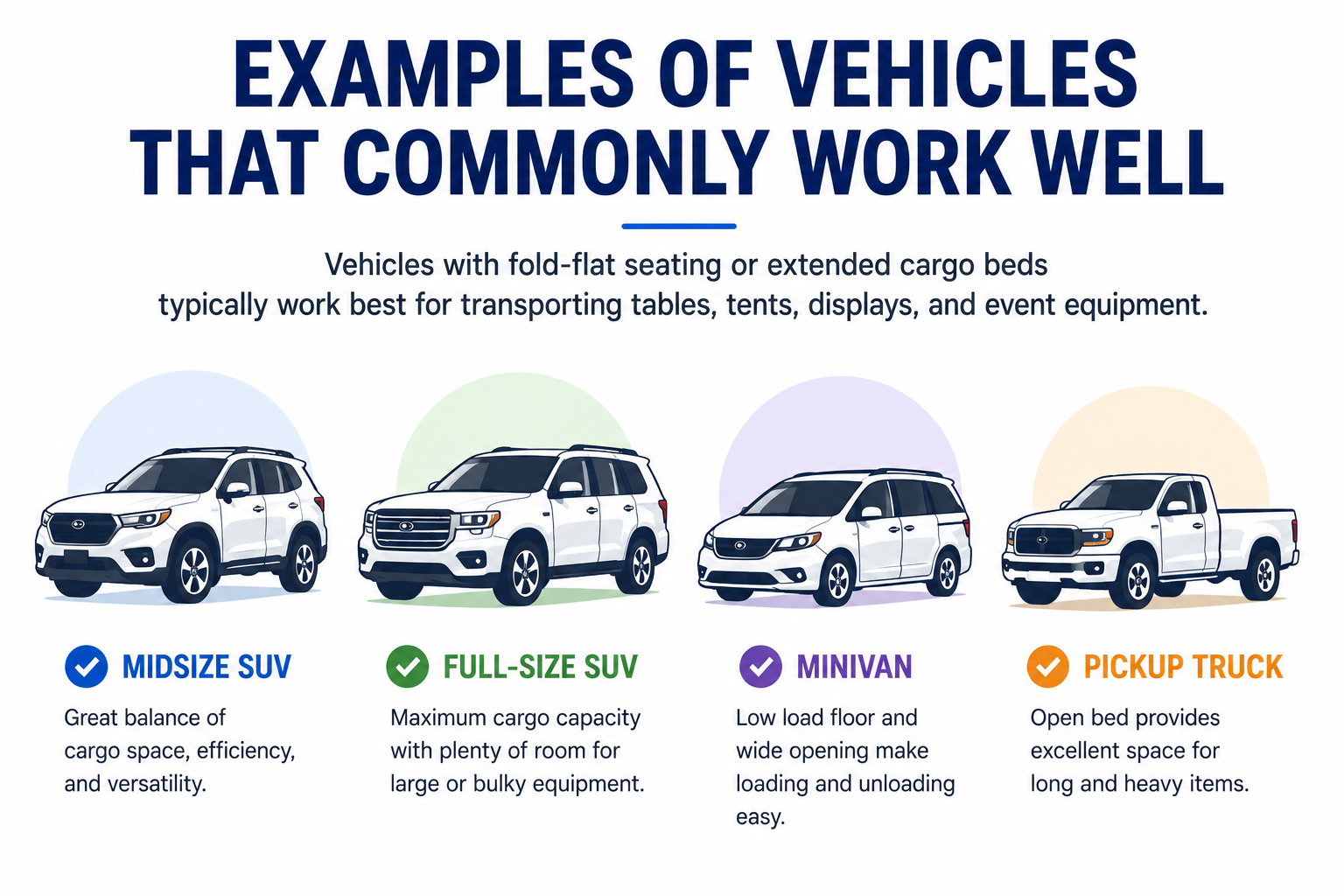
Because of the size and quantity of equipment involved, this role is generally best suited for volunteers with access to a midsize SUV or larger vehicle.
Safe transport capacity
Volunteers should be able to safely transport bins, displays, signage, tables, sensory space materials, or other event equipment within their own capacity.
Vehicle guidance
Recommended cargo space and vehicle types
Most transportation events require fold-flat cargo space with approximately 6 feet of usable cargo depth. Vehicles with larger cargo openings and flexible storage configurations tend to work best for transporting tables, tents, displays, sensory equipment, and storage bins.
Typical equipment examples
What you may be asked to transport depends on the event.
Equipment needs vary based on whether MNeurodivergent is providing a sensory space, indoor tabling setup, outdoor festival booth, or a combination of event supports. These examples help applicants understand the general scale of the role.
Sensory Space Equipment
- Sensory Rover
- Bubble Tube
- Hammock Swing Stand and Swing
- Hammock Stand
- Folding Rocking Chair
- Swing Lounge Chair
- Bins of fidgets and sensory tools
- Blackout tents
- Two crash pads
- Inflatable proprioception canoe
Indoor Convention Tabling
- 6' or 8' branded tablecloth
- 1–2 Durham 6-tray lockable cabinets
- Cash box
- 48" spinning floor display or 21" tabletop display
- Pin boards
- Flyer and business card holders
- Magnet board
- Pin bin
Outdoor Festival Setup
- 10' x 10' tent
- One 8' table
- Two 6' tables
- 6' or 8' branded tablecloths
- 1–2 Durham 6-tray lockable cabinets
- Cash box
- 48" spinning floor display or 21" tabletop display
- Pin boards
- Flyer and business card holders
- Magnet board
- Pin bins
- Two portable fans
- Portable floor
What you may help with
Supply transportation
Move bins, displays, signage, fidgets, sensory materials, or other event supplies to and from event locations.
Loading and unloading
Help get supplies out of vehicles, into the event space, back into storage, or transferred to another volunteer.
Setup and teardown logistics
Help arrange, pack, reload, and return supplies so events can start and end smoothly.
Supply awareness
Help notice whether bins, signs, displays, or materials are accounted for before leaving an event.
Transportation timing windows
Setup and teardown often happen outside normal event hours.
Equipment Transportation Volunteers help make sure event materials arrive before they are needed and leave safely after the event wraps up. Exact timing depends on the event, venue, and volunteer plan, but these are the windows that most commonly come up.
Setup / Drop-Off
Help transport sensory space, tabling, or event equipment to the venue before the event begins. Depending on the event, setup support commonly happens during these windows:
- Thursday: 4:00 PM – 10:00 PM
- Friday: 9:00 AM – 3:00 PM
- Saturday: 7:00 AM – 11:00 AM
Teardown / Pickup
Help transport equipment away from the venue after the event concludes. Teardown and pickup most commonly occur during these windows:
- Saturday: 4:00 PM – 10:00 PM
- Sunday: 4:00 PM – 7:00 PM
What it may feel like
Transportation support is practical, concrete, and often time-sensitive. You may coordinate pickup/drop-off times, help load supplies, bring materials to an event, or help pack things back up when the event ends.
This role can be a strong fit for someone who wants to help but does not want the main focus of their role to be talking with the public for an entire shift.
Training and support
You will have guidance before representing the organization.
Clear table expectations
We can provide guidance on what to say, how to answer common questions, and what to do when you are unsure.
Shift-based support
Public events are usually easier when volunteers are scheduled in shifts and know who else will be present.
Logistics planning
Transportation, setup, and teardown work best when expectations, timing, and supply responsibilities are clear before the event.
Ready to explore?
Find a tabling or logistics role that fits your capacity.
Whether you want to talk with the public, help set up, transport supplies, or support the event from behind the scenes, this pathway helps MNeurodivergent show up where people are.