
Volunteer Pathway
Help create calmer, more accessible event spaces.
Sensory Space Volunteers help MNeurodivergent create lower-stimulation areas at busy conventions, festivals, Pride events, and community gatherings. These spaces give people a place to pause, regulate, rest, or step away without having to leave the event entirely.
What this path is
Sensory spaces help more people stay connected.
Busy public events can be loud, crowded, bright, unpredictable, and exhausting. A sensory-friendly space gives attendees a supportive place to decompress. Volunteers help keep the space calm, welcoming, and functional without turning it into a medical, clinical, or high-pressure environment.
Calmer environment
Help maintain a lower-stimulation space where people can rest, regulate, or step away from crowds.
Gentle support
Offer basic orientation, answer simple questions, and help people understand how to use the space.
Practical setup
Support setup, organization, monitoring, and teardown of sensory items, seating, signage, and supplies.
Sensory-friendly support role
Sensory Space Volunteer
Sensory Space Volunteers help create and maintain a welcoming, calmer space at events. This role may include setup, greeting visitors, keeping the space organized, helping attendees understand expectations, and noticing when supplies or support are needed.
What sensory spaces can look like
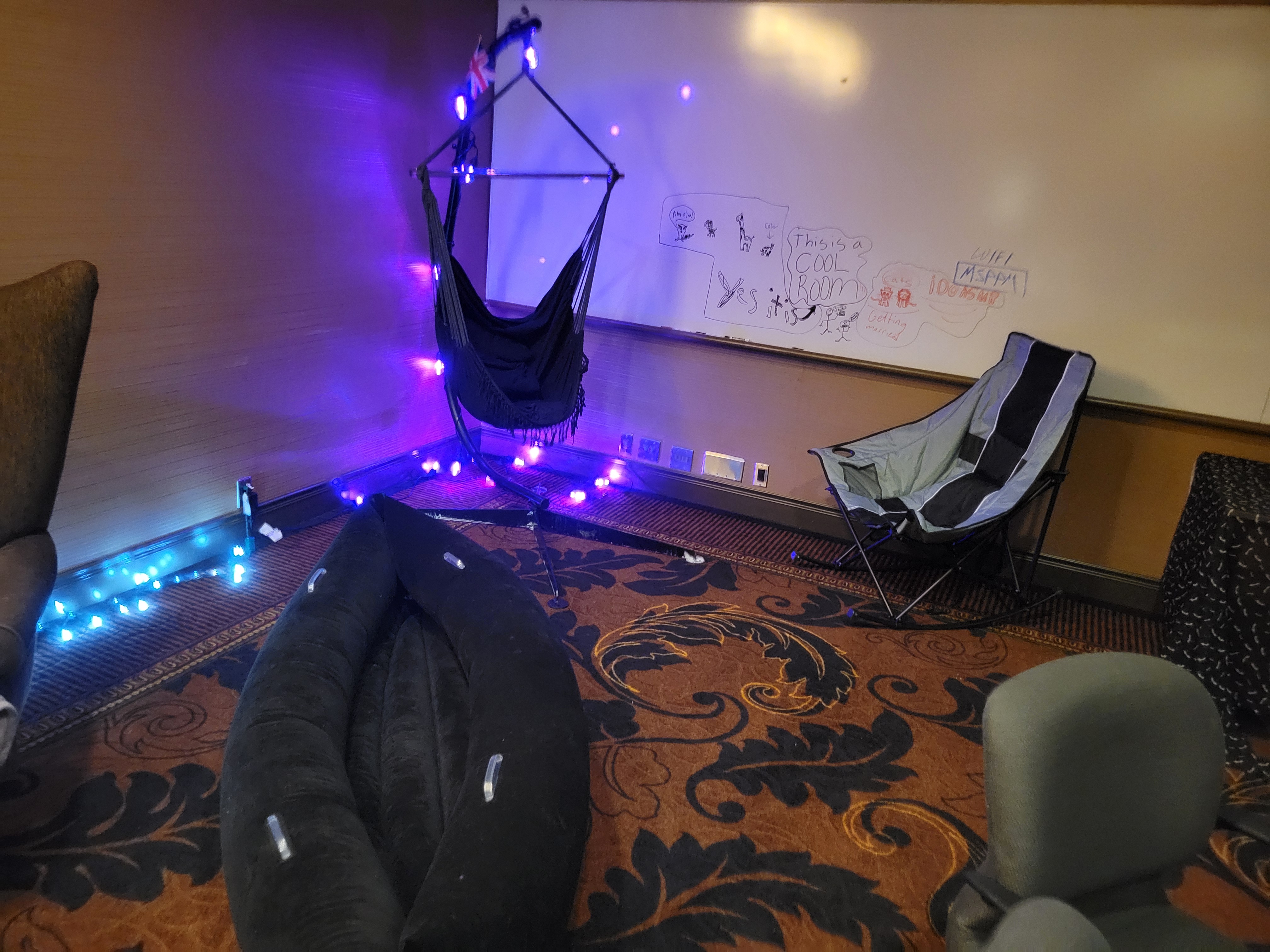
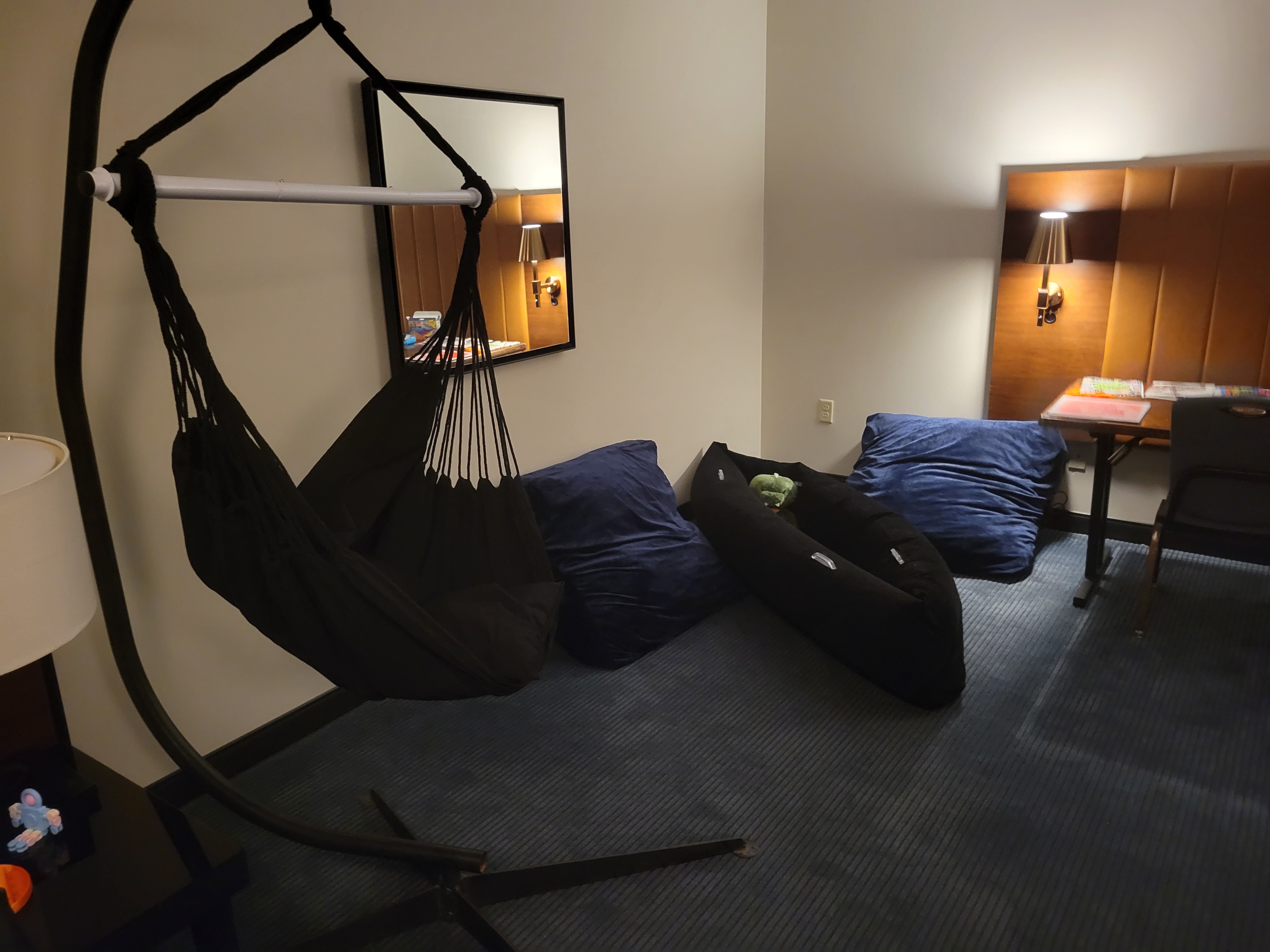
These are real examples of sensory-friendly spaces MNeurodivergent has supported at events. They show different layouts, seating options, lighting, and ways a room can be made more approachable.
Example: Sensory space walkthrough
A short look at how a sensory-friendly space can be arranged at a public event.
Core responsibilities
Setup and teardown
Help set up and take down sensory space items such as seating, tents, mats, signs, calming items, supplies, or other event materials.
Welcoming visitors
Greet people gently, explain what the space is for, and help attendees feel comfortable using the space without pressure.
Maintaining the space
Keep the area tidy, restock supplies, watch for crowding or overstimulation, and help the space stay calm and usable.
Basic boundary support
Help reinforce simple expectations, such as keeping voices low, respecting shared items, and using the space in a way that is safe for others.
Communication with event lead
Communicate availability, arrival times, shift coverage, supply needs, and any concerns during the event.
Team participation
Attend relevant training or meetings so expectations are clear and volunteers can support the space consistently.
Volunteer shift structure
A role with flexible shift windows and support for different energy patterns
Sensory spaces need support throughout the full duration of an event. To make coverage sustainable and predictable, we are typically looking for volunteers across several recurring shift windows. Different people thrive during different parts of the day, and this role can often work well for volunteers with nontraditional schedules or energy patterns.
Help maintain the sensory space during early event hours, welcome early attendees, and support the space as the day gets started.
Support the busiest part of the event, helping maintain a calm space as attendance and stimulation levels increase.
Continue supporting attendees later in the event and assist with closing tasks, cleanup, and teardown as needed.
Late-night shifts are uncommon, but some larger or longer events may need coverage after 9 or 10 PM. Some volunteers find evening or nighttime environments calmer, lower-pressure, or easier to navigate socially than peak daytime event hours.
Volunteers sign up for specific shifts in advance. Additional coverage is always appreciated when available, but clear shift commitments help the sensory space stay reliable.
What it may feel like
Sensory space work is often quieter than tabling, but it still requires attention. You may help someone find a place to sit, notice when a space is becoming too crowded, restock items, answer simple questions, or coordinate with the event lead if something needs support.
You are not expected to provide therapy, crisis services, medical care, or one-on-one supervision. The role is about helping maintain a supportive environment and knowing when to ask for help.
Training and support
You will have guidance before supporting a sensory space.
Clear expectations
Volunteers should know what the sensory space is for, what it is not for, and when to involve an event lead.
Shift-based support
Sensory spaces work best when volunteers know their shift times, who else is present, and how to communicate during the event.
Setup guidance
Layout, supplies, signage, and traffic flow should be planned so volunteers are not guessing during busy event moments.
Ready to explore?
Help make public events more accessible.
Sensory Space Volunteers help create places where people can pause, regulate, and stay connected to events that might otherwise become overwhelming.